


We start this Deep Dive series in Chile 🇨🇱
Follow along the 8-part series here.
Part 2 of our new Going Places Deep Dive series takes us to Atacama, the world's driest nonpolar desert.
(Catch up on Part 1 here.)
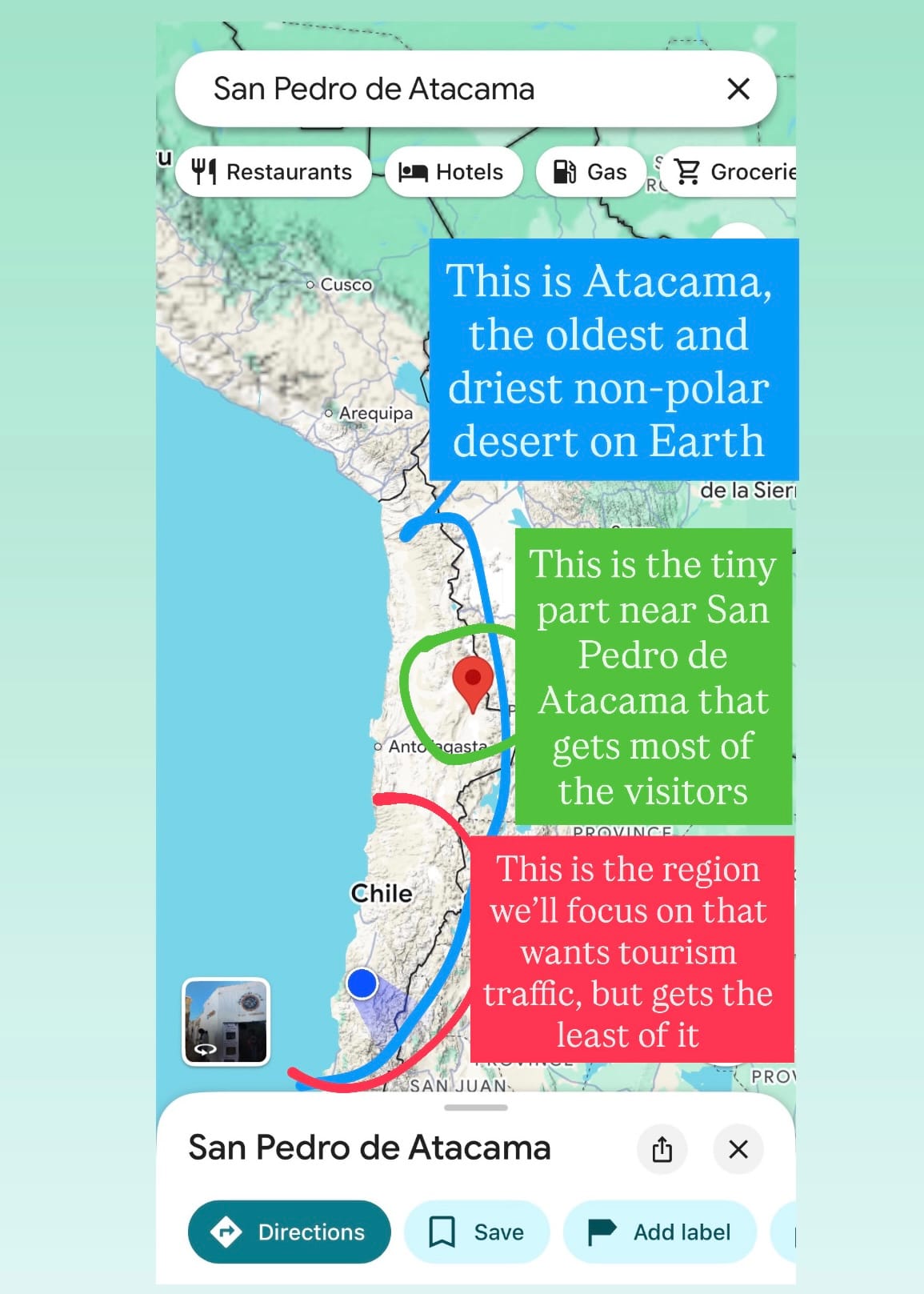
This high-altitude desert plateau stretches for 1,000 miles, taking up about one third of Chile's length.
Most visitors head to one area next to San Pedro de Atacama, an oasis town that has suffered from "the Venice syndrome" of extreme over-tourism in the last few decades.
With dramatic sceneries like the Valle de la Luna and Laguna Chaxa, a salt flat with a large population of flamingoes, this area is one of Chile's most visited spots.
But the desert extends far south, reaching across four of Chile's 16 regions.
Despite these vast territories, less than two percent of all foreign travel to the desert reaches its southern frontiers, Región de Atacama.
So, for the next few weeks, this is where we'll go.
"Here, Atacama has the landscapes, but not the people," Alvaro Espinoza told me when he picked me up from the airport in Copiapó.
Espinoza works at Alaya, a local tour operator that fulfilled my trip. You'll hear more from him in a bit.
To help you visualize our destination:
Last week, we introduced some of the challenges Indigenous groups face all across Chile.
(Catch up on Part 1 of our series here.)
Perhaps nowhere is this struggle as pronounced as in Atacama, an otherworldly region rich with copper, lithium, iron, gold, and silver.
Here, Atacama has the landscapes, but not the people.
Atacama's mining history stretches back thousands of years. Local Indigenous cultures like the Molle and the Diaguita have already worked with copper and brass found in nearby artisanal mines.
The Incas came to Atacama in the 15th century and made the process more efficient, sending copper, silver, and gold from Atacama to Cusco by llamas on the Inca Trail.
Industrial-scale operations began in the 19th century, when Chile gained independence from Spain and became open for business with just about anyone.
Through mining, southern desert towns like Copiapó and Vallenar in the fertile Huasco Valley fueled the fledgling country's growth. American and German investors, British and Italian merchants, and Arab and Chinese laborers all came to the region to take part in the mining boom.
By the 1980s, national and foreign mining companies were building massive open-pit mines near the region’s water sources, laying the groundwork for the central tension in the region's life:
Mining is the main source of income here. Yet it also threatens the fragile ecosystems of glaciers, rivers, and valleys that local communities rely on.
“For us, tourism is a way to develop other industries that can bring income and slow down the mining, which has too much impact,” Carlos Pizarro, who runs a local guiding company, Chillitrip, told me.
The stakes couldn't be higher. Mining operations are not only destroying the ecosystems – they're affecting humans as well.
In 1984, Boliden shipped 20,000 tonnes of toxic waste to Chile. Instead of proper disposal, the lead- and arsenic-filled waste was dumped on the outskirts of Arica.
In the following decades, residents suffered from cancers, birth defects, and other diseases.
“It's like our own Chernobyl,” Pizarro added when he first mentioned the Arica disaster.
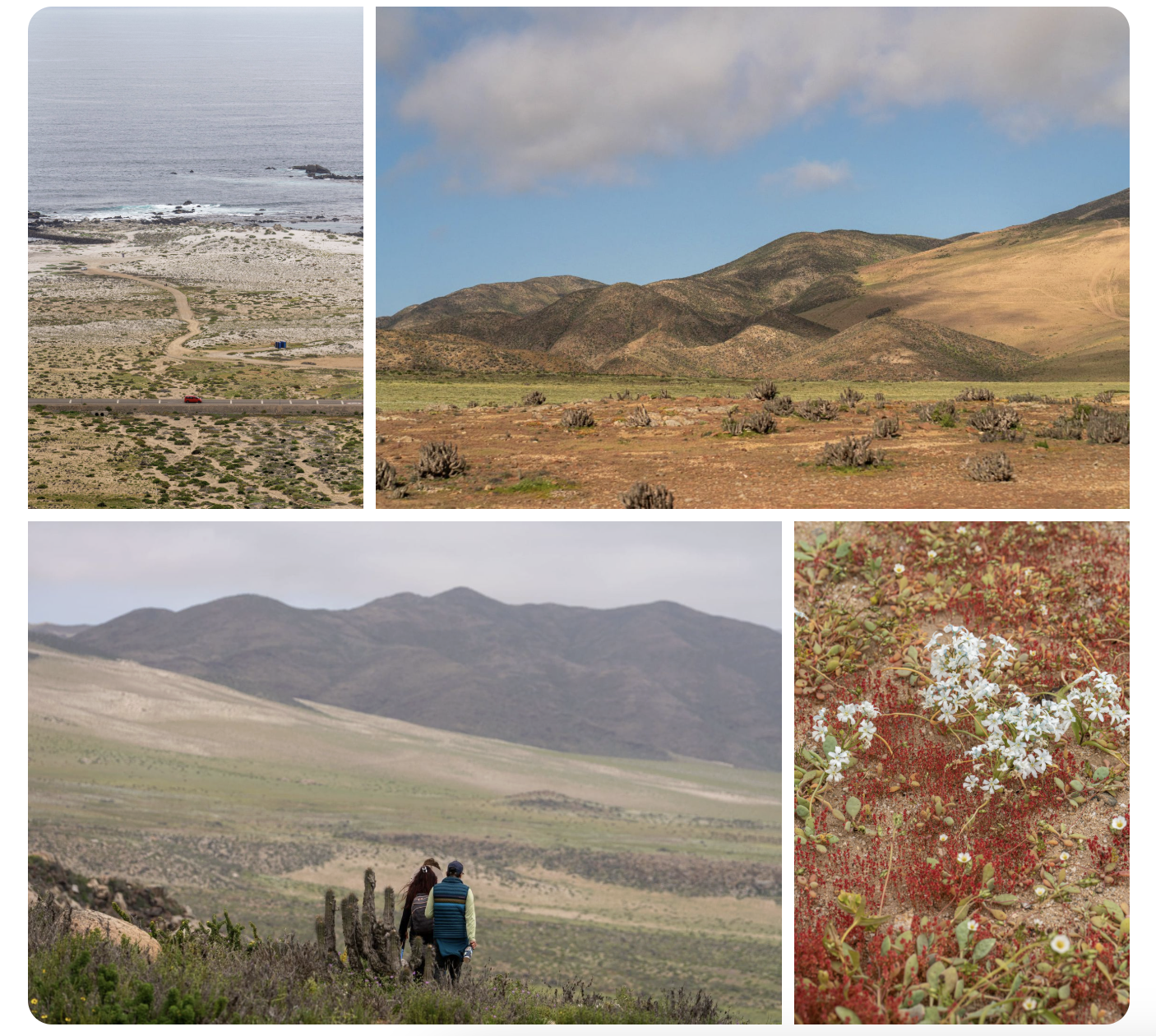
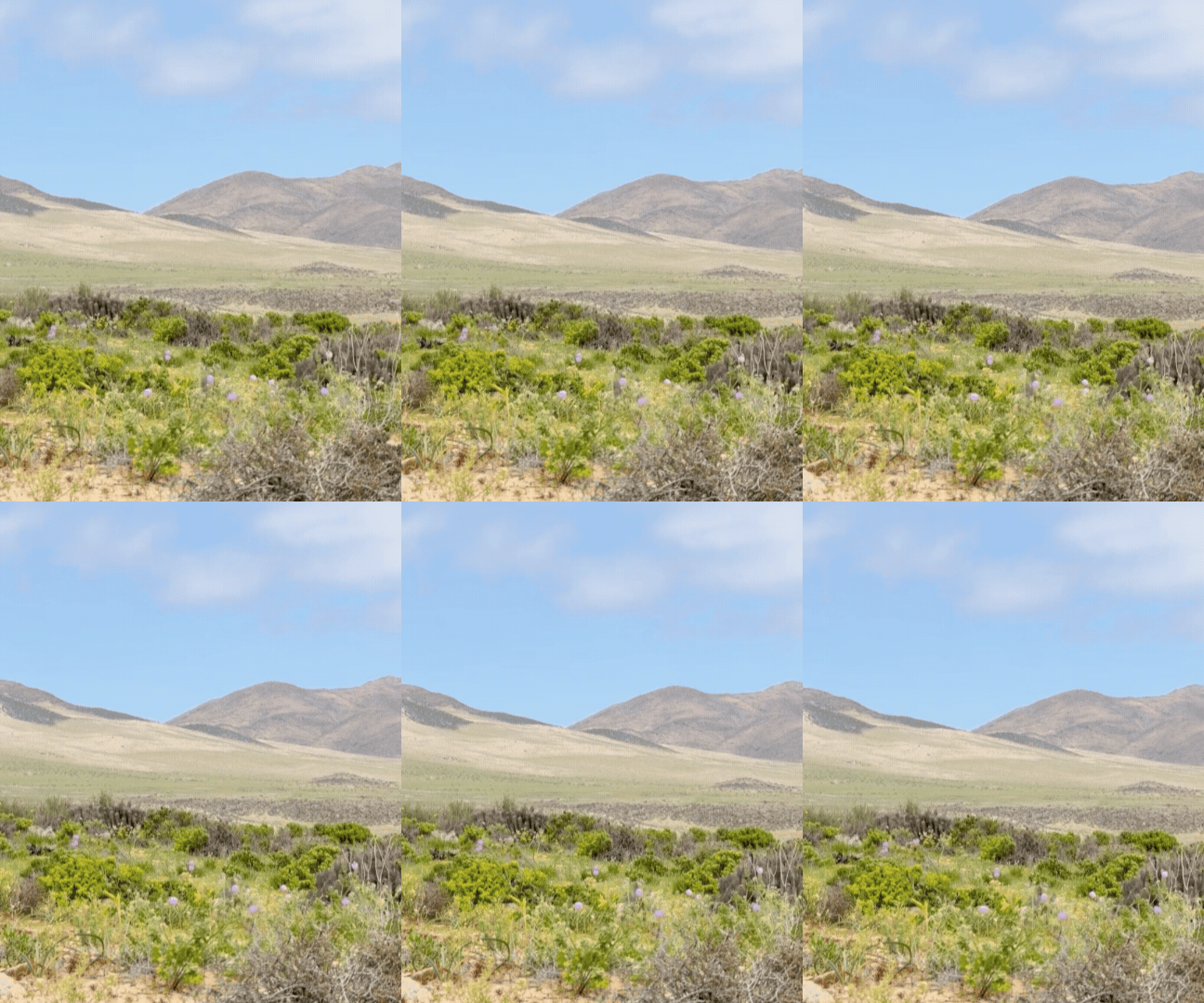
Riding past what seemed like an explosion of color across the land, we were witnessing a super bloom, a rare event in which conditions have to be just right for dormant seeds to wake up about a month after it rains, with flowers blanketing the desert another month later.
Pizarro explained that Atacama is home to 1,100 species of plants and 200 species of flowers, many endemic to this desert. It is the only blooming desert in the world with such variety.
I spotted the rare añañuca flower, native to Atacama, and the fragile yellow petals of the Copiapoa, an endemic cactus named after the town of Copiapó.
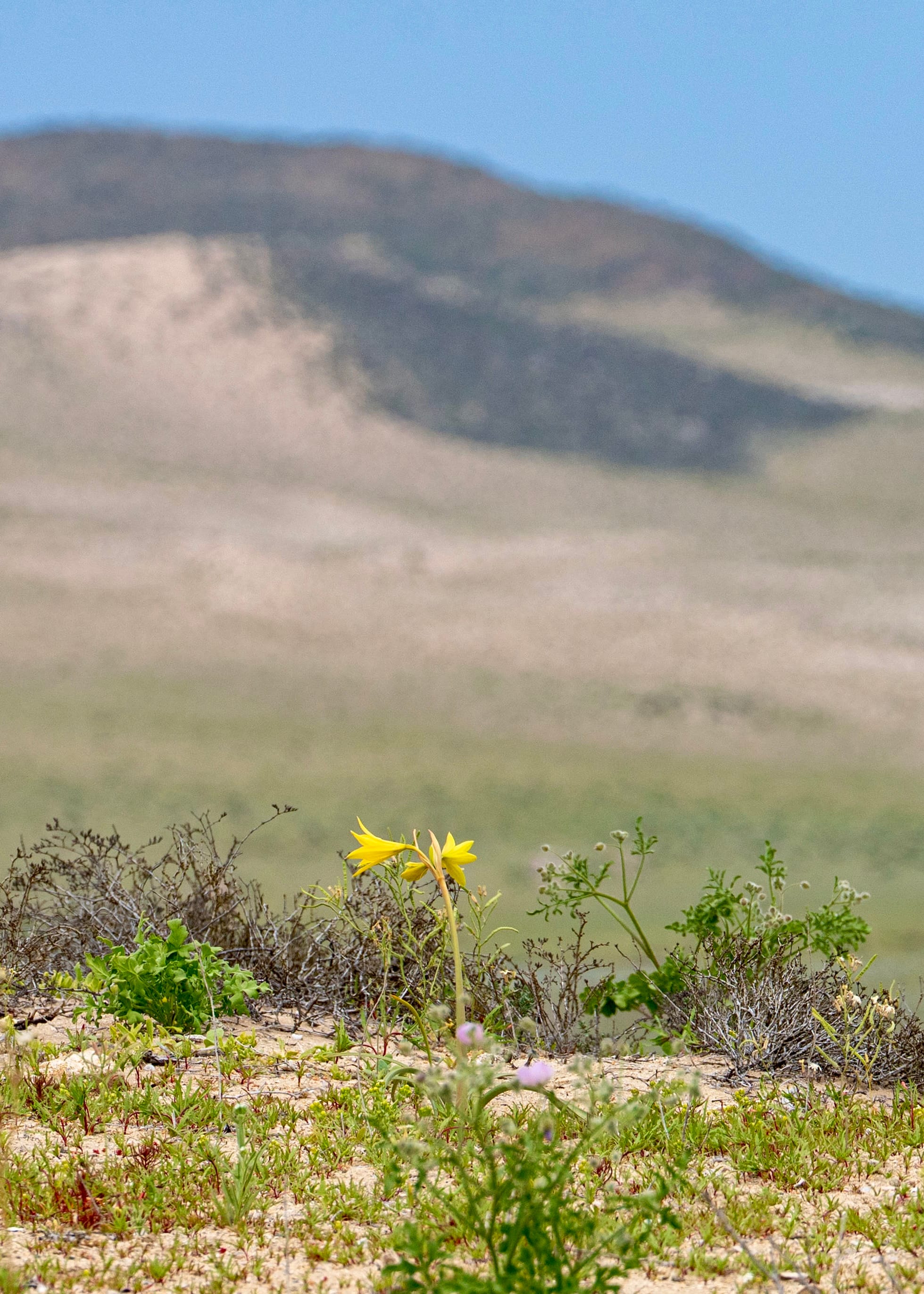
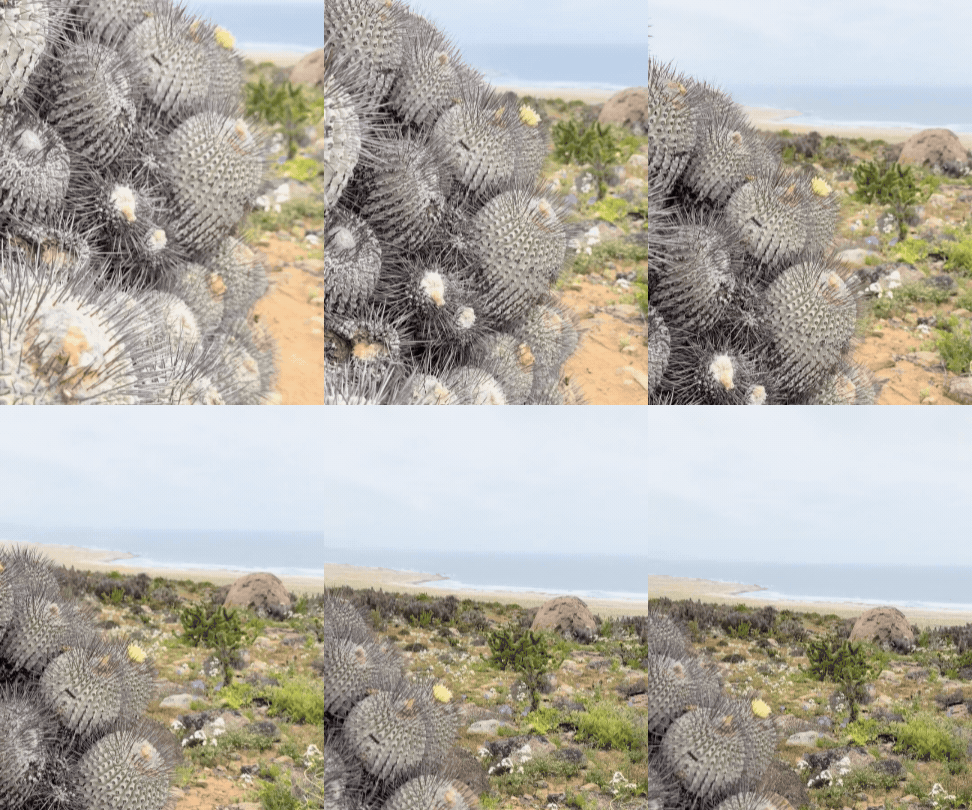
Añañuca and Copiapoa blooms in Atacama. © Yulia Denisyuk
Pizarro told me that perhaps due to all its minerals, Atacama has a magnetic energy.
Walking among the flowers, with an intense floral scent permeating the salty coastal air, I felt it.
In the desert, numerous efforts to transition away from mining are underway.
Projects include exporting new agricultural products like Atacama's own wine and pisco, cultivating goods like jojoba (as opposed to mining commodities), and processing minerals found inside the abandoned mining waste called tailings under public stewardship.
Special thanks to our 60+ paid members who make Going Places possible.
Community-led tourism development is another solution.
Espinoza told me that only three percent of the region's revenue comes from tourism today.
Throughout my decade-plus in the field, I’ve seen this story unfold in many parts of the globe: while some places suffer from overcrowding, others are looking to tourism as a viable answer to big challenges.
That's why our collective decisions on where to go matter more than ever.
This 2025 Fodor's Travel piece aptly calls the situation in the Chilean desert "the battleground between consumerism and tourism."
In Atacama, I've met many people who are cautiously hopeful. You'll start hearing from some of them in the next issue.
See you with Part 3 next Wednesday,
Yulia
© Yulia Denisyuk
For AFAR Magazine, I wrote about how your travel choices can help in Atacama. Read it here.
Going Places is a platform where Indigenous voices and wisdom across the world are centered and celebrated. Here, we have the space and the time to go as deep as we need to cover topics that help us all move through the world with more empathy, solidarity, and awareness.
That's why, throughout this series, you'll hear various voices and perspectives that reflect the Indigenous experience in Chile today.
Like our work?
1. Spread the word about our Chile series by using that Share button below. We are not on Substack by choice (more on this later), but it also means that it's harder for our stories to reach a wider audience. Your support is crucial!
2. Become our paid member to help us create more coverage like this
100% human-made | Become a member to support our work here

RISE Travel Institute is our Founding Member
RISE is a nonprofit with a mission to create a more just and equitable world through travel education.
➡️ This November, RISE is running the Experiential Journey to the Indian Himalayas. Their RISE Traveler Pathway is a new self-paced program for travelers, digital nomads, content creators, and tourism practitioners centered on justice and systems thinking. Use code GoingPlacesCommunity for 10% off!
Interested in your organization becoming a Founding Member? Get in touch here.

Radostina Boseva is our Founding Member
Radostina Boseva is a film wedding photographer with an editorial flair based between SF and Europe.
To get a shout-out like this in every issue, join us as an individual Founding Member here.
We pay $1,008 a year to host Going Places online. Help us offset this cost with a one-time tip 🙏

Member discussion